
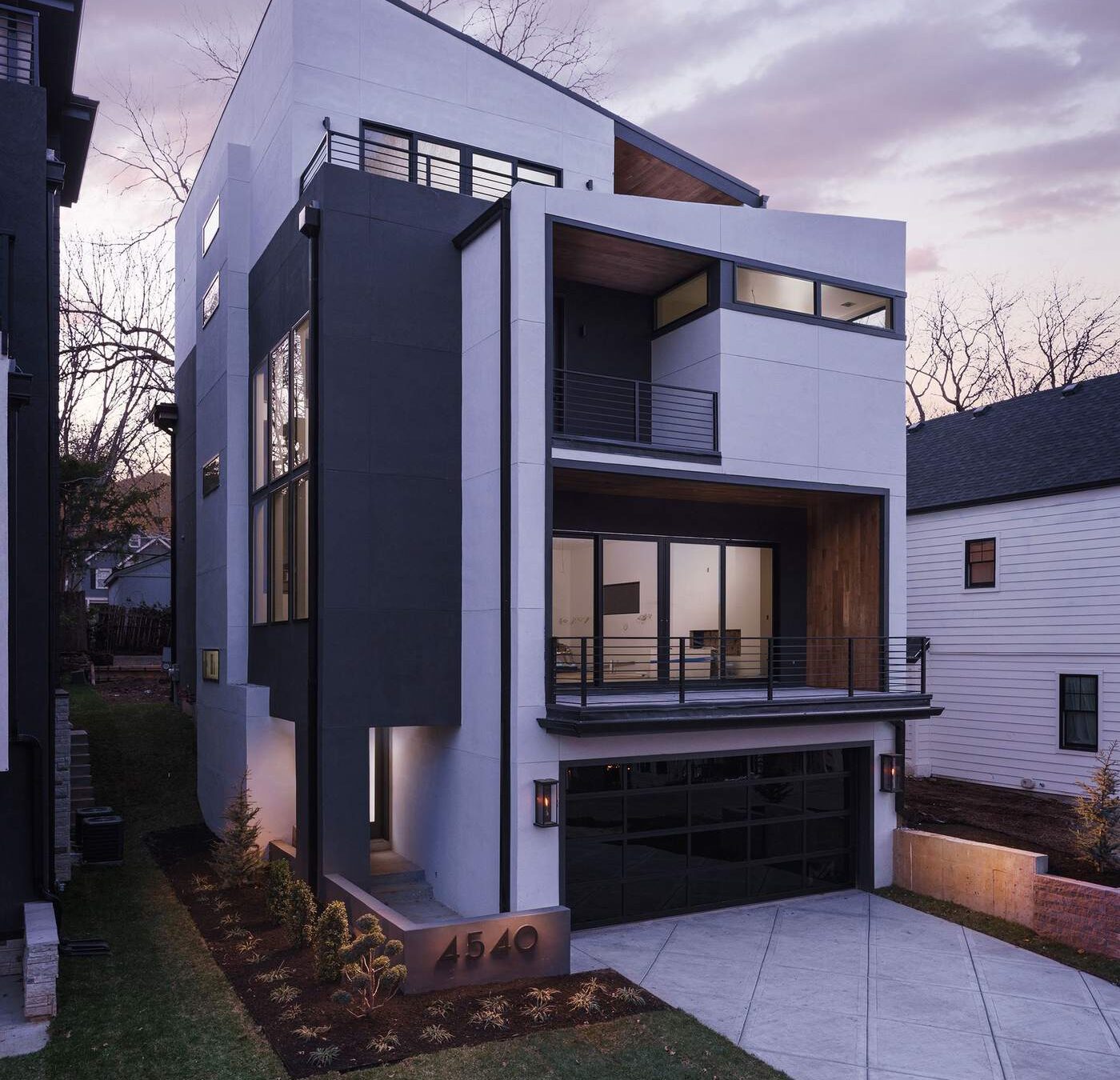
Desert modern architecture has matured well beyond the stark, all-white boxes that defined the style a decade ago. What we’re building in Scottsdale and Paradise Valley now is warmer, more textural, and more responsive to the specific site than the earlier, more generic version of the style.
Natural stone and warm wood are increasingly paired with the clean lines that define desert modern architecture, softening what used to be a colder material palette. Board-formed concrete, rammed earth-look finishes, and warm-toned stucco are showing up alongside glass and steel rather than being replaced by it.
Deep, architecturally integrated overhangs are doing double duty as both a passive-cooling strategy and a defining design feature — rather than adding shade structures after the fact, we’re designing rooflines and overhangs as part of the home’s primary form from the start.
Disappearing edges between indoor and outdoor space continue to define the style: large-format sliding or pocketing glass walls, continuous flooring materials from interior to covered patio, and pools designed as a visual extension of the living space rather than a separate backyard feature.
Dark, saturated accent walls and ceilings — often in a deep charcoal or bronze tone — are showing up as a counterpoint to all the natural light these homes let in, giving certain rooms (primary suites in particular) a more intimate, grounded feeling against all that glass.