
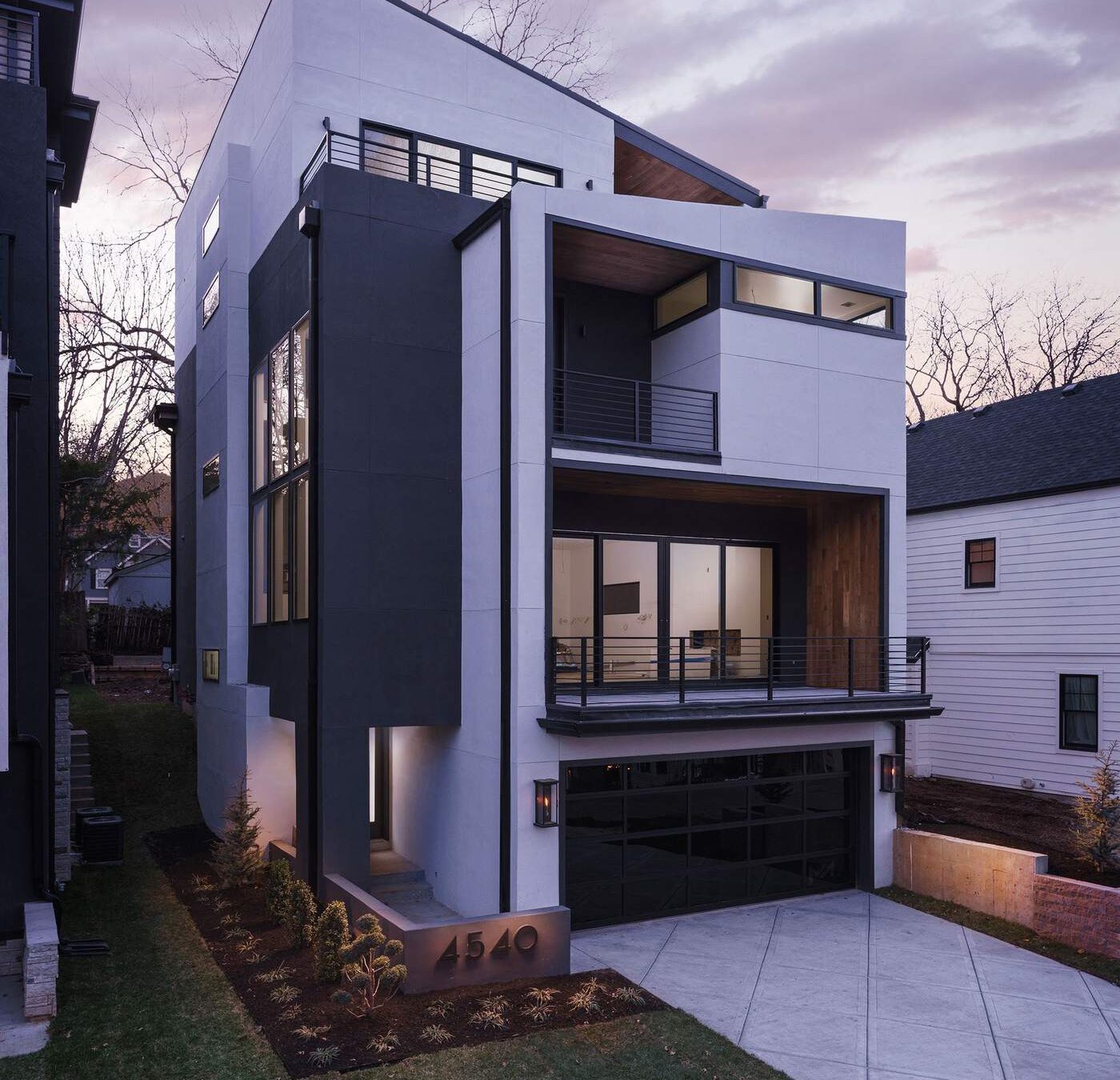
Custom home timelines get compressed in a lot of marketing material, which sets homeowners up for frustration when the real schedule unfolds. Here’s a more honest breakdown.
Design typically takes 2 to 4 months, depending on how much refinement your floor plan and elevations need and how quickly decisions get made. This phase moves faster when a homeowner comes in with a clear sense of priorities.
Pre-construction — engineering, permitting, and finalizing your budget — generally adds another 1 to 2 months, though permitting timelines vary significantly by municipality and can be a genuine bottleneck outside your builder’s control.
Construction itself usually runs 10 to 16 months for a fully custom home, depending on size and complexity. Larger homes, complex rooflines, and extensive stonework or millwork all add time; simpler, more efficient designs move faster.
All told, most fully custom home projects run 14 to 22 months from your first design conversation to move-in. That’s a meaningfully longer timeline than buying an existing home, which is worth factoring into any decision about where you’ll live during construction and how that affects your broader plans.
Why the schedule starts before groundbreaking
Many homeowners think of the build timeline as the months between excavation and move-in. In practice, substantial work happens before a crew arrives on site. The project team may need a survey, site feasibility review, conceptual plans, design revisions, engineering, selections, and approvals. The time required depends on the property, local review process, and the owner’s decision-making pace.
A clear design brief can help. Before meeting with an architect or builder, list essential spaces, budget priorities, and the features that are negotiable. If a lot is already owned, gather any available survey, subdivision requirements, and utility information. These steps do not eliminate review time, but they can reduce avoidable redesign.
Lot conditions affect the critical path
Site preparation is not identical from one parcel to another. A level subdivision lot with established utility connections may require less coordination than a wooded infill lot, a teardown, or a sloped property. Excavation, retaining walls, drainage systems, and specialized foundations can introduce extra design and construction activities.
In the Kansas City area, weather and soil conditions can affect excavation and exterior work. In Scottsdale and Paradise Valley, hillside engineering and local design review can become important schedule factors. Ask the builder which site conditions have already been investigated and which remain uncertain.
Selections and long lead materials
Windows, specialty doors, cabinetry, appliances, lighting, and custom millwork may need to be ordered well before installation. Some products require approved shop drawings or precise field measurements. If a major selection is changed after an order is placed, the schedule may need to be revised.
Work with the project manager to understand the selections calendar. Decide early on items that affect rough openings, plumbing locations, electrical loads, and structural requirements. Decorative finishes can sometimes be selected later, but waiting until the last moment is rarely the best way to control cost or schedule.
How construction milestones fit together
Once permits and site preparation are complete, construction typically progresses through foundation, framing, roofing and weather protection, rough plumbing and electrical, mechanical systems, insulation, drywall, and interior finishes. Inspections occur at required points. Some tasks overlap, while others cannot begin until a prior inspection or installation is complete.
For example, cabinetry installation depends on field conditions and finished surfaces. Countertop fabrication may require measurements after cabinets are installed. Final plumbing fixtures and appliances then follow. Understanding these dependencies helps explain why a small delay at one milestone can affect several later activities.
What causes delays and how to respond
Permitting, severe weather, product availability, unexpected site conditions, and late design changes can all affect timing. Not every delay is preventable. The important questions are how risks are identified, who is responsible for the next action, and how the revised schedule is communicated.
Ask for regular milestone updates that identify completed work, upcoming decisions, and any critical items requiring attention. If a product becomes unavailable, request written information about the proposed alternative, cost impact, and expected schedule effect. A documented process makes it easier to decide quickly without sacrificing quality.
Planning your move and temporary housing
A custom home schedule should be treated as an estimate rather than a guaranteed occupancy date. If you must sell an existing home, relocate for work, or enroll children in a new school, discuss timing buffers with your family and financial advisers. Temporary housing and storage may be worth including in the project plan.
Before moving in, allow time for final inspections, punch list items, cleaning, and homeowner orientation. Ask which documents and warranties will be delivered at closeout and how post-completion concerns are handled.
Questions to ask your builder
When will a detailed schedule be available? Which permits are required? What selections must be made before construction? How will delays be communicated? Who manages trade coordination? What assumptions underlie the proposed completion date? Answers to these questions are more useful than a promise that every project finishes within the same number of months.
To discuss a project in Kansas City, Overland Park, Scottsdale, or Paradise Valley, explore Hickok Homes custom home services or contact the team about your property and goals.