
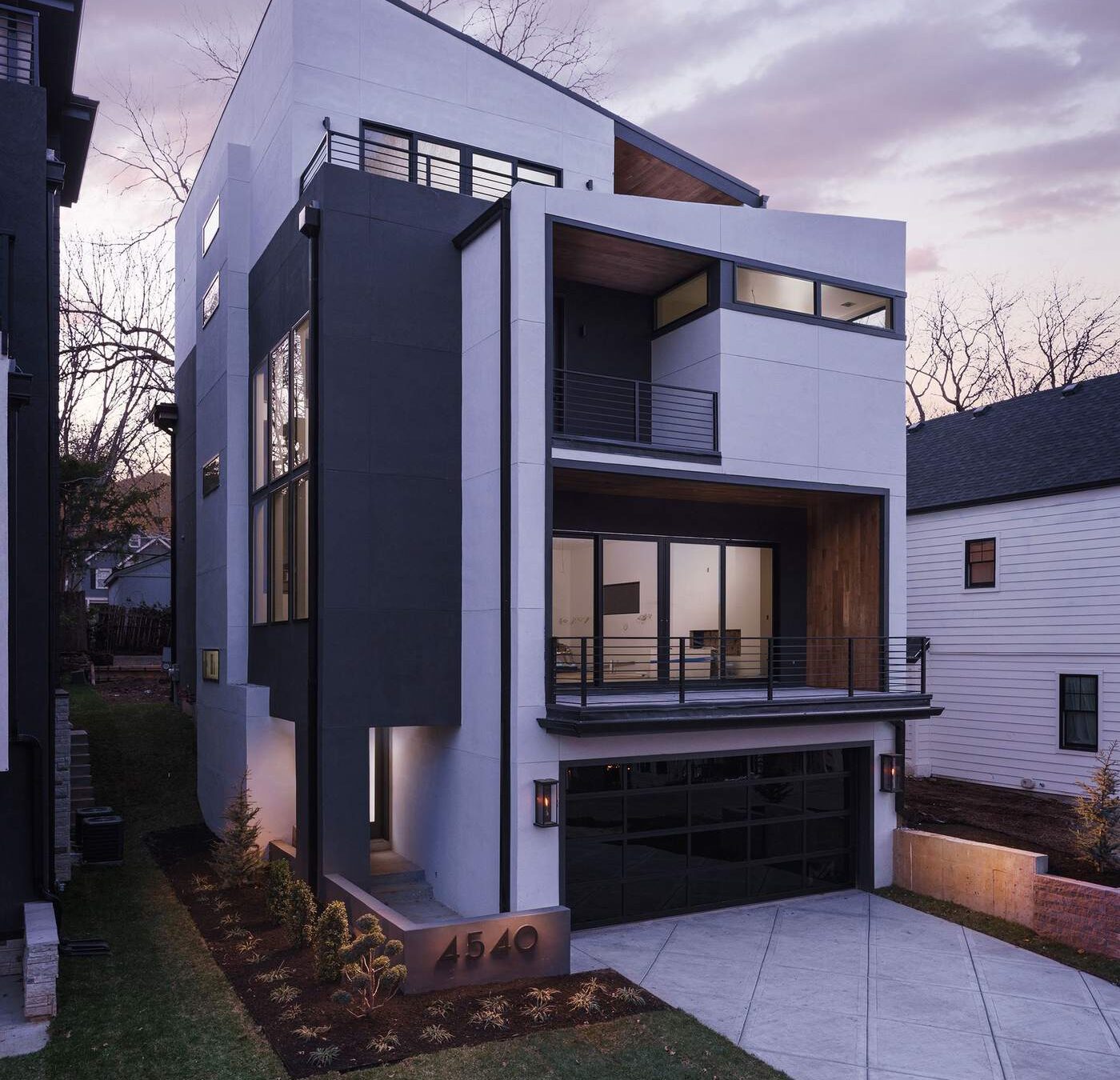
It’s one of the first questions every prospective custom home client asks, and it’s also one of the hardest to answer honestly with a single number. Custom home costs in the Kansas City metro vary enormously based on lot, size, structural complexity, and finish level — a quote that ignores those variables and gives you a flat per-square-foot figure is usually more marketing than estimate.
Lot cost and lot preparation are often the most underestimated piece of the budget. A flat, utility-ready suburban lot in Lee’s Summit or Blue Springs costs far less to prepare than a sloped infill lot in Brookside or a teardown in an established Johnson County neighborhood, where demolition, grading, and utility tie-ins can add real money before construction even begins.
From there, structural complexity drives cost more than most homeowners expect. A simple rectangular footprint with a straightforward roofline is dramatically less expensive to build than a home with multiple rooflines, large spans of structural glass, or a complex foundation due to soil or grading conditions. This is also where an experienced Kansas City builder earns their fee — knowing which architectural ambitions are worth the cost and which can be achieved more efficiently.
Finish level is the final, most controllable variable. Cabinetry, stone, flooring, and fixture selections can swing a budget by hundreds of thousands of dollars on an otherwise identical floor plan. We walk every client through realistic finish-level tiers during pre-construction, so the number you sign off on reflects choices you have actually made, not assumptions baked into a rough estimate.
The most useful thing a prospective custom home client can do before reaching out to any builder is get clear on priorities: is the goal maximum square footage, maximum finish level, or the most efficient build on a specific budget ceiling? A good design-build partner should be able to tell you, fairly quickly, whether your vision and your budget are realistically aligned — and where the tradeoffs are if they’re not.